Flooding can leave Central Texas homeowners facing difficult decisions about what to save, what to discard, and where to keep their belongings during repairs. Whether your home has been affected by flash flooding, heavy rain, or water damage, taking the right steps can help prevent additional losses.
In this guide, we’ll explain how to identify salvageable belongings, clean and dry items safely, and prepare them for temporary storage while your home is being restored.
What to Do Immediately After a Flood
Before entering a flooded property, your top priority should be safety, not salvaging personal belongings. Make sure your property is safe to enter, and only go into rooms and parts of the home that are safe to be in. At this time, photograph damage to your property and document damage to belongings for insurance claims. Separate your damaged items from those that remain dry and undamaged.
This approach will allow you to work through the damaged items to see if they can be recovered or need to be fully replaced. From there, you can learn how to store belongings after a flood and organize your possessions by the attention and care they need.
Which Flood-Damaged Belongings Can Be Saved?
After a flood, some items are easy to recover, while others will likely need disposal and replacement. Common salvageable items include metal furniture, washable clothing, and certain solid wood furniture that water won’t damage. Items that may require disposal include contaminated mattresses, carpeting, and upholstered furniture. For items you want to recover or sentimental items you aren’t willing to part with after a flood, consider professional cleaning or restoration. This professional cleaning is a good idea for items you can’t simply dry out or wash, as they likely need more attention to be usable again.
How to Clean and Dry Belongings Before Storage
Before you decide how to store belongings after a flood, clean and dry all your possessions before putting them in a storage unit. Remove all mud, debris, and moisture from your items so they don’t get further damaged while in storage. Clean and disinfect salvageable items as needed before packing them for storage. Dry all your belongings thoroughly to prevent mold and mildew when you store items for weeks or months. Never place wet or contaminated belongings in a storage unit, as you’ll only increase the chances of needing to replace them later.
- Wear gloves, waterproof boots, and other appropriate protective equipment when handling flood-damaged belongings.
- Keep children and pets away from contaminated areas.
- Separate clean, dry belongings from items exposed to floodwater.
- Use fans, dehumidifiers, and ventilation where safe to accelerate drying.
- Consult professional restoration specialists for valuable furniture, electronics, photographs, and important documents.
- Do not place belongings in storage until they have been thoroughly cleaned and dried.
What Flood-Damaged Items Should You Never Put in a Storage Unit?
After a flood, it’s important to know which belongings are safe to store and which could cause further damage. Placing wet or contaminated items in a storage unit can lead to mold growth, unpleasant odors, and damage to other belongings. Before moving your possessions into temporary storage, avoid storing the following items:
- Wet mattresses and upholstered furniture: Mattresses, sofas, and padded chairs can absorb large amounts of water, making them difficult to dry completely. Floodwater may also introduce bacteria and other contaminants. Severely affected items often need to be discarded.
- Damp carpeting and rugs: Wet carpets, rugs, and padding can develop mold and mildew if they aren’t properly cleaned and dried. Consider professional cleaning for valuable rugs before placing them in storage.
- Contaminated household items: Belongings exposed to sewage or potentially hazardous floodwater may require professional cleaning or disposal. Never place contaminated items in storage without ensuring they are safe to keep.
- Food and perishable products: Avoid storing food, beverages, and other perishable items, especially those exposed to floodwater. These items can attract pests and create unpleasant odors.
- Hazardous chemicals and flammable materials: Gasoline, paint thinners, pesticides, and other hazardous substances should never be placed in a storage unit. Follow local disposal guidelines for chemicals affected by flooding.
- Water-damaged electronics and appliances: Electronics exposed to floodwater may contain trapped moisture or damaged electrical components. Have valuable electronics and appliances evaluated by a qualified professional before deciding whether they can be safely restored and stored.
Even if you choose a climate-controlled storage unit, it’s essential to clean and thoroughly dry your belongings before moving them in. Climate control can help protect sensitive items from extreme temperatures and humidity, but it cannot prevent mold growth in belongings that are already damp or contaminated.
If you’re unsure whether an item is safe to store, consult a professional restoration company before bringing it to your storage unit.
Benefits of Climate-Controlled Storage After Flooding
When choosing a storage unit in Texas after a flood, we strongly recommend climate-controlled storage units. High temperatures and humidity common in Central Texas can damage furniture, electronics, and documents when you store them in a regular unit for an extended period. Climate-controlled storage units are especially useful during Texas summers to help protect your belongings after a flood. Keep in mind that climate control cannot prevent mold in improperly dried items, so always follow the tips above to prevent mold and mildew from growing after a flood.
Tips for Packing and Organizing Belongings
Once you have selected a storage unit in Central Texas, make sure you know how to store belongings effectively after a flood. Use sturdy containers and label everything that you put into storage. From there, you can create an inventory of your stored items. This process will make accessing your belongings much easier in the future, as you’ll know exactly where each item is stored. Protect your furniture with appropriate coverings to avoid further damage after a flood. When you start moving items into a storage unit, organize your belongings for easy access during repairs by placing items you need regularly closer to the front of the unit.
Does Homeowners Insurance Cover Flood Damage in Texas?
Standard homeowners insurance generally excludes flood damage in Texas. We recommend that homeowners consider separate flood insurance through the National Flood Insurance Program (NFIP). Each policy is different, so always read the fine print to see what is and isn’t included. If you experience a flood at your property, document the damage and keep storage receipts, as you may be able to claim these fees back. Coverage for temporary storage depends on your policy, so you should also check if this is included before taking out a new policy. Check FloodSmart.gov for additional information on flood damage in Texas for homeowners.
Frequently Asked Questions
How Long Should Furniture Dry Before Going Into Storage?
Furniture should be completely dry before being placed in a storage unit. Depending on the material, humidity, and extent of water exposure, drying can take several days or longer. Upholstered furniture and solid wood pieces may retain moisture even when their surfaces feel dry. Consider having valuable or heavily water-damaged furniture professionally evaluated before storing it to prevent mold growth and further damage.
Can I Put Flood-Damaged Furniture in a Storage Unit?
You can store furniture that has been properly cleaned, dried, and determined to be safe to keep. However, furniture exposed to contaminated floodwater may require professional restoration or disposal. Avoid placing wet mattresses, upholstered furniture, or other damp belongings in storage, as trapped moisture can encourage mold growth and damage nearby items.
Is Climate-Controlled Storage Better After a Flood?
Climate-controlled storage is often a good choice for Central Texas homeowners who need temporary storage during flood repairs. These units help maintain more consistent temperatures and, depending on the facility, may also regulate humidity. This can provide additional protection for wooden furniture, electronics, documents, and other sensitive belongings. However, all items must be thoroughly cleaned and dried before storage.
Does Flood Insurance Cover Temporary Storage Costs?
Standard homeowners insurance generally does not cover damage caused by flooding. Separate flood insurance may cover certain damaged belongings, but temporary storage expenses are not automatically included. Coverage depends on your specific policy and circumstances. Contact your insurance provider to determine whether moving or storage expenses qualify for reimbursement, and keep receipts for all flood-related costs.
How Can I Protect Important Documents After a Flood?
Important documents, including birth certificates, property records, and financial paperwork, should be handled carefully after exposure to floodwater. If documents are wet, avoid stacking them together or placing them in sealed containers before drying. Consider consulting a professional document restoration service for valuable or irreplaceable records. Once documents are completely dry, store them in protective folders or waterproof containers in a clean, dry environment. Creating digital copies can also help protect important information from future damage.
Choosing Temporary Storage During Home Repairs
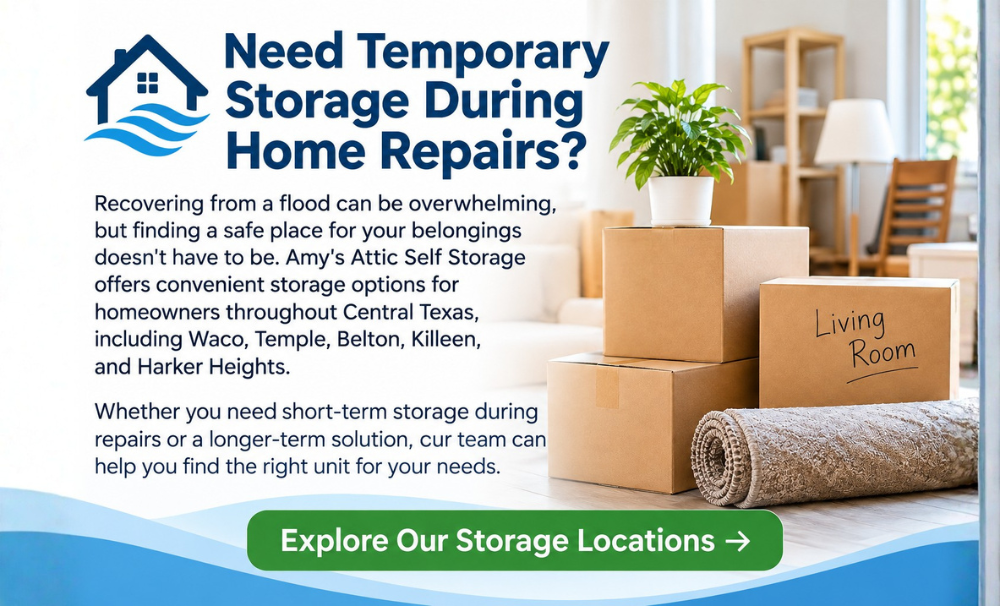
When selecting a temporary storage unit during post-flood home repairs, consider unit size, accessibility, location, and climate control. Amy’s Attic Self Storage has locations across Central Texas, including Waco, Temple, Belton, Killeen, and Harker Heights. We offer storage units in various sizes to help homeowners after a flood, with options for homes and apartments of all shapes and sizes. Temporary storage keeps cleaned belongings out of construction areas and protects your personal items from further damage after a flood.
By following the tips we’ve shared above, you can rebuild your life and learn how to store belongings after a flood to avoid further damage and loss. Here at Amy’s Attic Self Storage, we are dedicated to supporting homeowners in Central Texas through major life changes. Are you looking for a storage unit in Texas after a flood or property damage? Contact us today to discuss the storage units and services we offer or to book a tour of one of our Central Texas storage facilities.