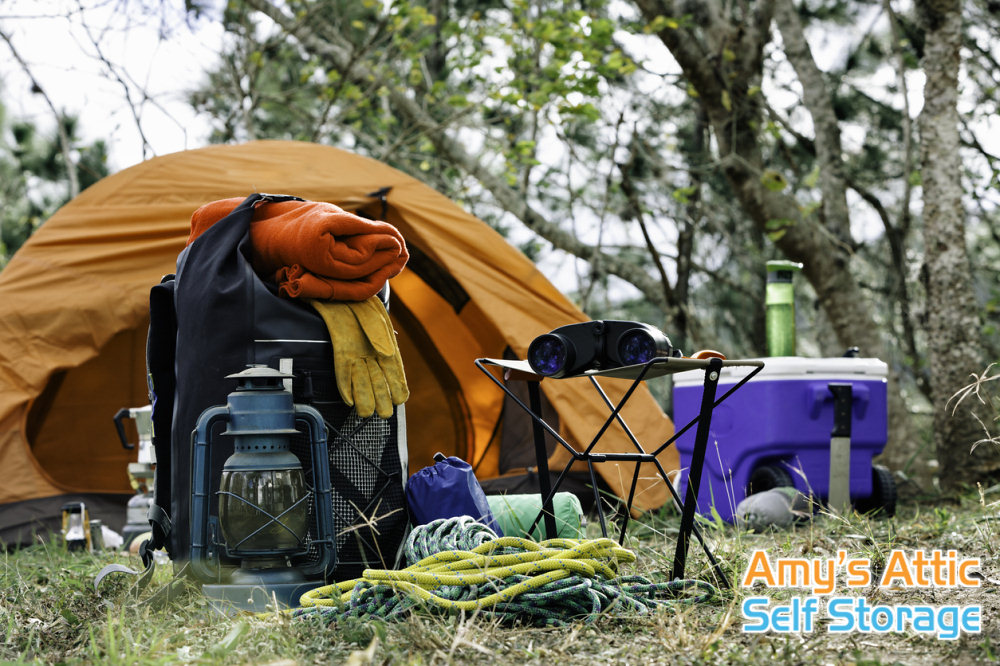
While many Texas households enjoy canoeing, fishing, or camping, the equipment these activities require can take up far more space than might be worthwhile for only being used for a certain portion of the year, when the weather is favorable. That makes personal storage units invaluable for when the off-season hits.
Finding a unit which will fit your equipment is the first hurdle, and the second is ensuring it is properly stored, so that when you need an item, you can trust that it will always be there. Backyard sheds may be an obvious choice, but they can get hot, cold, and crowded, and they may not be worth the high cost of refurbishment. These storage tips will help you keep your equipment in good condition, with minimal to no upkeep required.
Quick Storage Checklist
- Clean and completely dry outdoor equipment before long-term storage.
- Keep canoes, kayaks, and fishing rods properly supported and off the floor.
- Organize accessories by activity so related equipment stays together and is easy to find.
- Keep sensitive camping gear dry, loose when appropriate, and protected from extreme temperatures.
Canoeing
The average canoe can range in size anywhere from 15 to 20 feet, let alone the space that oars, life vests, and other equipment can also take up! Its storage depends upon its size, material, and weight. Wood canoes or kayaks tend to be the heaviest, with metal materials coming shortly behind. Newer plastics and composites tend to be the lightest.
While the weight of a canoe may not seem important for storage, it’s useful to be familiar with how easily it can be maneuvered, what kind of mount it may need, and whether it can be carried and repositioned by hand.
To maximize the longevity of a canoe or kayak, it’s best to store it out of the sun in a climate-controlled environment. Simply placing the vessel on the ground may be convenient, but it does not evenly distribute its weight and can warp or scratch the sides. A cost-effective and far better storage method can be to buy several sawhorses from any home improvement store and mount the canoe upside down, with the sawhorses evenly spaced to distribute its weight.
As for canoe accessories, such as life vests, oars, or rope, it’s a good idea to either hang those accessories nearby or organize them together in a storage bin or on a shelf. Storing them inside the canoe or kayak may seem obvious, but it can lead to the accessories becoming disorganized, and you might end up forgetting an important item.
Life vests should always be neatly straightened out and not placed under any heavy items. Crushing or deforming the padding in typical life vests can reduce their buoyancy.
Fishing
Ideal for the beautiful waterways and lakes of Central Texas, fishing is a classic American pastime that many families can enjoy at a low cost. While most forms of bait are best left at home, poles, buckets, and other tools can be kept in storage between seasons so you know exactly where to find them when the time comes.
Fishing poles can be fragile, especially if stored haphazardly. Poles can bend and distort over time, reducing their effectiveness and increasing the chances that your next prize catch might get away. For longer-term storage, it’s best to store the rods in a vertical wall rack or mount them horizontally. Removing the reels and storing them in a separate container or near their original rods is also a good practice.
For more detailed rod, reel, and fishing gear storage guidance, see Best Fishing Spots in Central Texas and How to Store Fishing Gear.
Camping
Camping equipment can range from tents, sleeping bags, and hand tools to fire starters and first aid kits. Due to this variety, it’s a good idea to separate each item by category, then store related items together on the same shelf or in the same container. Labeling each kit with exactly what is stored inside will make it far easier to pack exactly what you need in your car, RV, or backpack.
- Essentials – This includes the absolute basics for any camping trip, which often also happen to be the bulkiest items. Sleeping bags, tents, light sources, and navigation tools such as maps, GPS devices, or compasses all need proper storage. Tents should be completely dry before storage and kept loose in a cool, dry place. Sleeping bags should also be fully dry and stored uncompressed in a breathable storage sack rather than kept tightly compressed for long periods. Tent stakes or poles should be stored in a separate container nearby and clearly labeled.
- Survival – It’s difficult to determine how a camping trip may go. Emergency tools such as whistles, flares, and medical supplies should be stored in a clear container and reviewed carefully before every trip to ensure every item is in working order and has not expired. Mess kits, including pots, pans, or fire starter kits, should be stored together in transparent containers for easy review. Survival tools such as knives, hatchets, or walking sticks should be placed in their holsters and stored securely. Items that may be affected by extreme heat, cold, or moisture should be kept in an appropriate climate-controlled environment.
- Misc. – This includes items such as accessory chargers, spare socks, tent repair kits, and entertainment items such as playing cards or travel board games. Keeping smaller accessories together in clearly labeled containers can make packing easier and help prevent important items from being misplaced.
Hiking
Hiking gear is easier to manage when it is cleaned, dried, and grouped by use before storage. Empty backpacks and hydration packs, remove any food or trash, and make sure fabric items are completely dry before putting them away.
Trekking poles can be collapsed and stored together, while hiking footwear should be cleaned and allowed to dry fully before storage. Avoid packing damp shoes, clothing, or backpacks into closed containers, as trapped moisture can lead to odors or damage.
Keep smaller items such as headlamps, compasses, repair supplies, hydration accessories, and other hiking essentials in a labeled container so they are easy to locate before your next trip.
Shopping
When it comes to safety and comfort during any camping trip, selecting quality equipment is important. If you need to replace or add outdoor gear, REI offers a broad range of camping, canoeing, fishing, hiking, and outdoor equipment.
- REI Dallas, 5929 E Northwest Hwy, Dallas TX – When it comes to finding canoes, tents, camping equipment, or other outdoor gear, REI carries an extensive selection. Store associates may also be able to provide additional product-specific guidance about caring for and storing outdoor equipment.
Amy’s Attic Self Storage offers safe and convenient personal storage options across Central Texas. Climate-controlled storage can provide additional protection for outdoor equipment that may be sensitive to temperature changes, moisture, or long periods of seasonal storage.
When you need additional space for camping, fishing, canoeing, hiking, or other outdoor gear, you can view Central Texas storage unit rates and availability to find an option that fits your storage needs.