Furniture storage is no longer just a short-term solution during a move. Across Central Texas, homeowners, renters, military families, and local businesses are using storage units to protect furniture during renovations, relocations, downsizing, and lifestyle changes.
At Amy’s Attic Self Storage, serving Temple, Killeen, Harker Heights, and surrounding communities, the same furniture storage mistakes appear again and again. Understanding today’s storage trends and avoiding common misconceptions can help you protect your furniture, save money, and avoid unnecessary damage.
This guide explains what Central Texas residents need to know before storing furniture and how to do it correctly in local conditions.
Why Furniture Storage Is Growing in Central Texas
Furniture storage demand continues to rise throughout Central Texas due to several regional trends:
- Homeowners renovating instead of selling during shifting housing markets
- Military relocations, deployments, and temporary housing gaps
- Increased use of furnished short-term rentals
- Downsizing among retirees and empty nesters
- Remote work leading to home office conversions and excess furniture
These trends have made both short-term and long-term furniture storage far more common than in the past.
Common Furniture Storage Myths That Cost Homeowners Money
“Any storage unit works for furniture”
Central Texas heat and humidity can cause wood to warp, finishes to crack, and upholstery to absorb moisture. Without proper temperature and humidity control, furniture can deteriorate quickly.
“Plastic wrap protects furniture”
Plastic wrap is designed for transport, not long-term storage. According to storage industry guidance, plastic traps moisture and increases the risk of mould and mildew on wood and fabric surfaces. This is especially problematic in warm climates like Texas, as explained by storage experts at SpareFoot in their guide on proper furniture preparation.
“Stacking furniture saves space without risk”
Improper stacking is one of the most common causes of furniture damage. Heavy items placed on sofas, tables, or dressers can bend frames, weaken joints, and permanently distort their structure.
“Furniture doesn’t need preparation”
Furniture stored without cleaning or preparation can attract pests, trap stains, and develop long-term odours. Preparation is essential, not optional.
Why Climate-Controlled Storage Matters in Texas
Climate-controlled storage is one of the most important factors when storing furniture in Central Texas.
Industry research consistently shows that stable temperature and humidity levels help prevent wood expansion, leather cracking, fabric deterioration, and mould growth caused by heat and moisture exposure. Storage professionals widely recommend climate control for furniture, especially in hot and humid regions like Texas.
Amy’s Attic offers climate-controlled storage units designed to protect furniture year-round from extreme temperatures and humidity swings.
How to Prepare Furniture for Storage the Right Way
Proper preparation greatly reduces the risk of damage during storage.
Furniture should be thoroughly cleaned before storage. Dirt, body oils, and spills can become permanent stains if left untreated. Items must be completely dry before entering a storage unit.
Large furniture should be disassembled where possible. Removing table legs, headboards, and shelving reduces stress on joints and improves space efficiency.
Use breathable protection such as furniture blankets or cotton covers rather than plastic. Breathable materials protect surfaces while allowing airflow, which helps prevent moisture buildup.
Whenever possible, elevate furniture slightly off the floor using pallets or blocks. This improves airflow and provides an extra layer of moisture protection.
How to Arrange Furniture Inside a Storage Unit
How furniture is arranged inside the unit matters just as much as preparation.
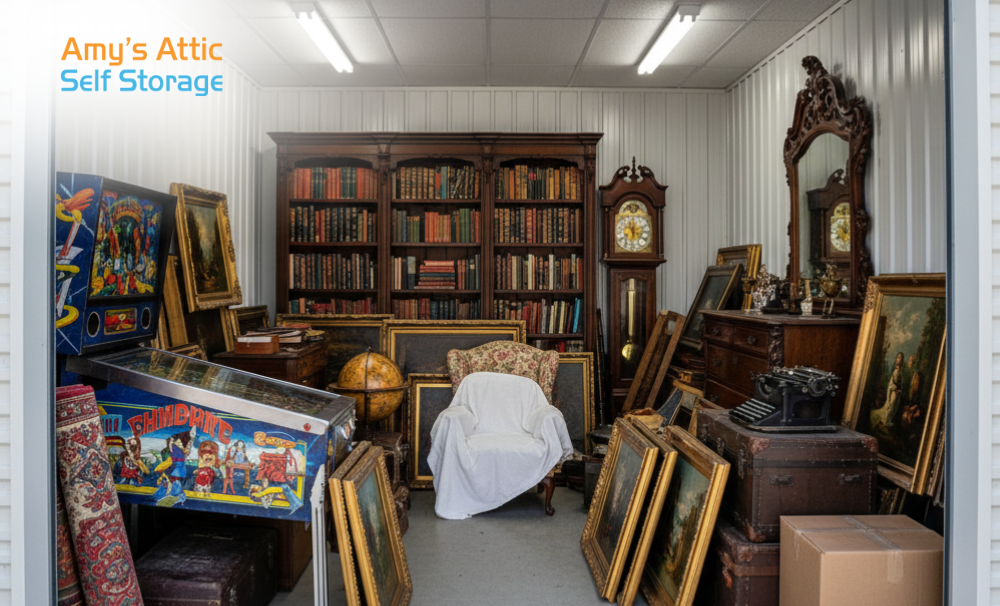
Heavier items should always be placed on the bottom, with lighter items on top. Sofas and mattresses should be stored upright when recommended by the manufacturer to prevent sagging.
Leave small gaps between items to allow airflow, even in climate-controlled units. Furniture should not be pressed tightly against walls.
Creating a narrow access path allows you to check on items or retrieve furniture without shifting everything, reducing the risk of accidental damage.
Choosing the Right Storage Unit Size for Furniture
Selecting the right unit size helps protect furniture and control costs.
Smaller units work well for a limited number of items, such as a bedroom set or office furniture. Medium and large units are better suited for full households, business furniture, or long-term storage.
Overcrowding furniture into a unit that is too small increases the risk of scratches, pressure damage, and poor airflow. Amy’s Attic offers a range of unit sizes, including options similar to a 10×15 storage unit or a 10×20 storage unit, making it easier to find the right fit.
Furniture Storage for Temple, Killeen, and Harker Heights Residents
Local conditions play a major role in furniture storage. Central Texas experiences extreme summer heat, humidity spikes, and seasonal temperature swings that can damage furniture if not properly protected.
Choosing a nearby facility makes it easier to check on items, rotate furniture, or retrieve pieces as plans change. Working with a local storage provider that understands regional climate challenges helps ensure furniture stays protected.
Amy’s Attic serves Temple, Killeen, and Harker Heights with secure, well-maintained facilities designed for local storage needs.
When Furniture Storage Makes the Most Sense
Furniture storage is especially useful during:
- Home renovations or remodeling projects
- Military deployments or PCS transitions
- Downsizing or estate transitions
- Temporary housing or job relocations
- Seasonal furniture rotation
Flexible short-term storage options allow customers to store furniture for exactly as long as they need, without long-term commitments.
Frequently Asked Questions About Furniture Storage
How long can furniture stay in storage?
With proper preparation and climate-controlled conditions, furniture can be safely stored for months or even years without damage.
Is climate-controlled storage necessary for furniture in Texas?
Yes. For wood, leather, upholstered, and finished furniture, climate-controlled storage significantly reduces the risk of heat and humidity damage, as recommended by storage industry experts.
Can furniture develop mould in storage?
Yes. High humidity and poor airflow increase mould risk. Cleaning furniture thoroughly, using breathable covers, and choosing climate-controlled storage greatly reduce this risk.
Should furniture be covered while in storage?
Yes, but breathable covers should be used instead of plastic to prevent trapped moisture and mildew.
Store Your Furniture the Right Way in Central Texas
Storing furniture properly protects your investment and prevents costly replacements.
Amy’s Attic Self Storage offers secure, climate-controlled furniture storage across Central Texas, with flexible terms and local support you can trust. Whether you are renovating, relocating, or simply creating more space at home, the right storage solution makes all the difference.
Visit Amy’s Attic Self Storage to find a location near you or speak with a local storage expert to reserve the right furniture storage unit today.