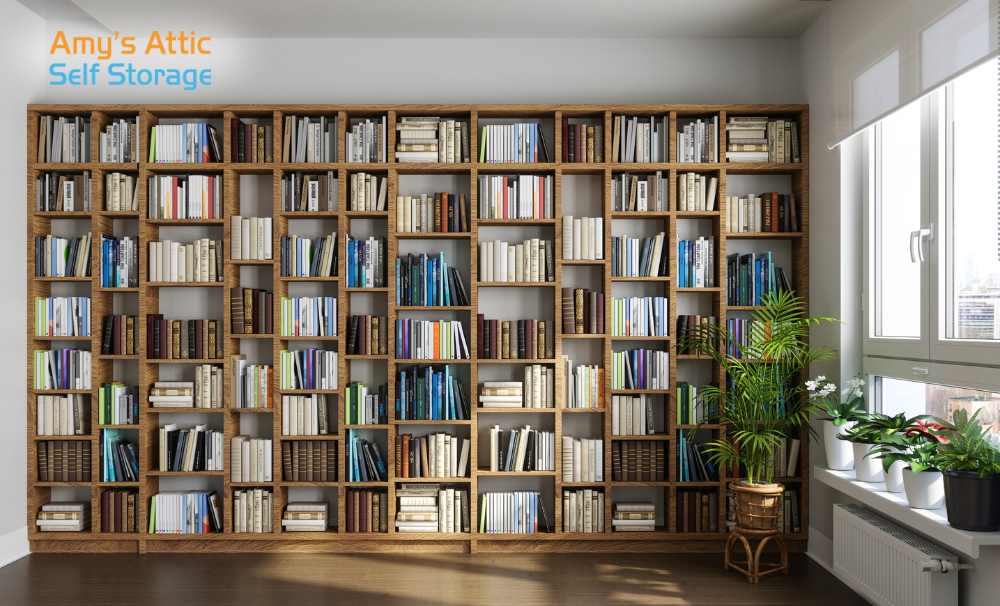
If you love your books, you want them to last. But storing books long-term in Texas comes with unique challenges. Intense heat, humidity, sunlight, and pests can quickly turn a cherished collection into warped, yellowed, or moldy pages.
Whether you’re preparing for a move, downsizing, or simply running out of shelf space, this guide explains precisely how to protect your books from damage in a self storage unit in Central Texas.
Why Book Storage Is Tricky in Texas
Texas is a wonderful place to live, but it’s tough on paper. Our region experiences:
- High heat, which can reach 100°F+ in summer
- High humidity, which encourages mold
- Sudden temperature swings
- Pests like silverfish, termites, and booklice
If books are stored the wrong way or in the wrong place, then they can warp, fade, crack, or grow mold within months.
The good news? With proper preparation and climate-controlled storage, your books can remain in excellent condition for years.
What Damages Books Over Time
1. Heat & Humidity
Texas heat causes glue to soften and pages to warp. Humidity is even worse: it creates the perfect environment for mold and mildew. Ideally, books should be stored at:
- Temperature: 60–70°F
- Humidity: 30–50%
These levels are nearly impossible to maintain in garages, attics, or sheds in Texas.
2. Sunlight & UV Exposure
Direct sunlight bleaches covers, fades ink, and makes pages brittle. Even indirect light can cause long-term discoloration.
3. Pests
Silverfish, termites, and booklice all feed on paper, glue, and cardboard. These common pests thrive in dark, warm, humid areas – exactly the conditions in most Texas garages.
4. Poor Airflow
Stagnant air allows moisture to accumulate, increasing the odds of mold and mildew growth.
How to Prepare Books for Long-Term Storage
1. Clean Each Book
- Dust the top edges and spine with a soft cloth.
- Wipe covers lightly (no moisture!).
- Let books air out for several hours before packing.
2. Inspect for Damage
Before storing, look for signs of:
- Mold
- Dampness
- Brittle pages
- Loose spines
Storing a damaged book can spread problems to the rest of your collection.
3. Sort & Label
Organize your books by:
- Genre
- Author
- Size
- Fragility or value
Label each box so you can easily retrieve items later.
Choose the Right Packing Materials
Best Boxes for Book Storage
- Acid-free book boxes (ideal for rare or delicate books)
- Small, sturdy cardboard boxes (to keep weight manageable)
Avoid extra-large boxes as they become too heavy and can damage books at the bottom.
Materials to Use
- Acid-free packing paper
- Silica gel packets for moisture control
Materials to Avoid
- Plastic bags (trap moisture)
- Newspaper (ink transfers to pages)
- Cheap plastic totes without ventilation (cause condensation)
How to Pack Books Properly
Do:
- Pack books either flat or upright, with all sides supported.
- Fill gaps with acid-free paper to prevent shifting.
- Keep boxes no more than 40–50 lbs for safe handling.
Don’t:
- Pack books at an angle because they’ll warp.
- Overpack boxes because this tension stresses the book spines.
- Leave extra space because the books may slide and bend during the moving process.
Why Climate-Controlled Storage Is Essential in Texas
Climate-controlled storage keeps your books in a stable environment year-round, protecting them from:
- Central Texas heat
- Humidity
- Sudden temperature changes
- Mold
- Pests
At Amy’s Attic Self Storage, our climate-controlled units across Central Texas provide the ideal conditions for preserving everything from everyday paperbacks to rare first editions.
You’ll also enjoy:
- Clean, modern facilities
- 24/7 security
- Easy access
- Multiple convenient locations in Central Texas
Organizing Books Inside Your Storage Unit
1. Use Shelving If Possible
Shelves keep boxes off the floor and allow better airflow.
2. Avoid Over-Stacking
Too many boxes stacked high can lead to crushed items or collapsing piles.
3. Create an Inventory
Use a simple spreadsheet or barcode app to track:
- What’s in each box
- Condition notes
- Replacement value
- Location within the unit
This inventory is invaluable for large or valuable collections.
Tips for Storing Rare or Valuable Books
If you’re storing first editions, signed books, or other collectibles:
- Use archival-quality boxes or sleeves
- Add extra silica gel packets
- Wrap each book in acid-free paper
- Consider book insurance for high-value items
- Store in a dedicated climate-controlled section of your unit
What Not to Do When Storing Books Long-Term in Texas
- Do not store books in the garage, attic, or shed
- Do not place boxes directly on a concrete floor
- Do not wrap books in plastic
- Do not expose boxes to sunlight
- Do not store books near water heaters or AC units
Conclusion
Books hold stories, memories, and sometimes significant monetary value. With Texas’s extreme climate, long-term preservation requires careful preparation and the right environment. By cleaning, packing, labeling, and choosing a climate-controlled storage unit, you can keep your collection safe for decades.
If you’re ready to protect your books the right way, Amy’s Attic Self Storage offers clean, secure, and climate-controlled units throughout Central Texas.
Reserve your storage unit today and give your books the care they deserve.